Kpopsies - Hatch Baby Unicorns
- 3.9
- Rating
- 50.00M
- Installs
- Free
- Price

 Analysis by App-foxy
Some children’s games are built around winning, while Kpopsies - Hatch Baby Unicorns is much more interested in gentle care and creative play. I found it easiest to understand as a digital pet game with an educational, child-friendly feel: you look after cute unicorn characters, keep them entertained, change their appearance, and move between small activities. My overall view is positive, but with an important condition: it works best for younger children who enjoy repetition, pretend care, and colorful dress-up, not for players looking for deep lessons, challenging puzzles, or a long adventure.
That focus explains why the game has reached more than 50 million installs and holds a 4.0 average from around 88 thousand ratings. Those figures suggest that its simple routine connects with a broad family audience, although they do not change the central trade-off. The game is approachable because it keeps things uncomplicated; the same simplicity may feel limited after a child has seen the main activities several times.
What playing the unicorn-care routine feels like
The basic appeal is immediate. Instead of asking a child to master complicated controls, the game places the attention on baby unicorns and their needs. Feeding, playing, dancing, dressing up, and general care create a sequence that feels familiar even to a child who has never played a virtual-pet game before. I like this design because the actions are easy to understand without a long explanation from an adult.
You May Also Like

 Blood Strike: 2.5 Anniversary
Blood Strike’s Loadouts Turn Every Drop Into a Tactical Gamble
A close look at Blood Strike’s custom loadouts: how fast access to signature weapons reshapes its battle royale rhythm, rewards preparation, and narrows the gap between fights.

 Pandora - Music & Podcasts
Pandora’s Music Is Easy to Start, but Harder to Recover
Pandora’s strength is its low-effort path from a seed to a station. Its weak spot is how much confidence it asks you to place in connection, setup, and quiet recovery.

 8 Ball Pool
 Is Built on Rivalries, Rematches, and Routine
A close look at the rivalries, rematches, shared routines, and unanswered safety questions that turn a quick pool match into a persistent mobile community.

 Samsung Music
’s Quiet Strength Is Playing What You Already Own
Its reach comes less from spectacle than from dependable access to a personal library. That simplicity is both the app’s strongest retention engine and its ceiling.

 AccuWeather: Weather Radar
AccuWeather Review: A Quick, Clear Forecast for Everyday Decisions
For everyday plans, the best forecast is the one you can understand quickly. AccuWeather makes rain timing, radar, and local conditions easy to act on, with a few trade-offs.

 Hill Climb Racing
Why Hill Climb Racing Still Turns Crashes Into One More Run
A tiny car, a bumpy hill and one more upgrade: Hill Climb Racing keeps resurfacing because its simple chaos makes every near-miss feel personal.
More From Our News Desk



The unicorn theme also gives ordinary care tasks a stronger imaginative identity. A child is not simply completing a checklist; they are looking after a small fantasy character. That distinction matters. When a game presents care through bright creatures and playful activities, a child can remain engaged while practicing simple sequencing: notice what the character needs, choose an activity, then move on to something else.
I would not describe it as a traditional teaching tool with lessons, levels, or academic exercises. Its educational value comes more from guided pretend play and decision-making than from formal instruction. That makes it suitable for a short, relaxed play session, but parents should not expect it to replace a dedicated early-learning game focused on letters, numbers, reading, or structured problem solving.
The mini games add useful variety to the care loop. They prevent the experience from becoming only feeding and dressing, and they give the child something active to do between quieter customization moments. In my experience, this kind of rhythm is especially effective when a child wants control but still benefits from a clearly framed environment. There is room to choose, but the game does not overwhelm the player with a huge world or complicated menus.
Dance is another smart part of the mix. It changes the pace and gives the unicorns a more expressive personality than a static pet would have. Dress-up serves a different purpose: it lets children make visible choices and create a look that feels personal. These activities are not equally appealing to every child, but together they make the game more flexible than a care simulator built around one repeated action.
Why the first sessions are easy to share with a child
One of the strongest practical qualities is that an adult can understand the experience quickly. If a child asks for help, I can explain the basic idea in everyday language: check the unicorn, choose a care activity, try a game, and use the customization options when the child wants a creative break. There is no need to teach a complicated control scheme before the fun begins.
That makes it a reasonable choice for a quiet moment at home. Imagine a child waiting while dinner is prepared. A short session can be built around checking on a unicorn, playing one or two mini games, and choosing an outfit. The game has enough separate activities to make that break feel like more than a single button press, while its gentle structure makes it easier to stop than a highly competitive game that constantly pushes the player toward another match.
I also see value in playing together rather than handing over the device and walking away. A parent can ask why the child chose a particular outfit, which activity the unicorn seems to enjoy, or what should happen next. Those conversations are not built-in lessons, but they turn the game’s simple choices into opportunities for language, imagination, and turn-taking.
A useful tip is to treat the game as a small routine rather than an unlimited activity. Let the child choose one care task, one creative task, and one mini game, then finish. This keeps the experience focused and reduces the chance that the repetition will become tiring. It also gives the child a natural stopping point without making the game feel like a punishment.
The strongest part: variety without overwhelming complexity
For me, the best design decision is the combination of care, mini games, dancing, and dress-up. Each mode answers a different mood. A child who wants to nurture can feed or care for a unicorn. A child who wants movement can choose dancing. Someone who prefers creativity can concentrate on clothes and appearance. The game therefore has more than one entry point, even though the overall concept remains very simple.
This is a better fit for younger players than many open-ended sandbox games, which can offer more freedom but also demand more reading, navigation, and self-direction. Here, the fantasy is narrower and easier to follow. That narrowness is a strength when a child needs a calm, understandable game rather than a large world to explore.
At the same time, I would not confuse accessibility with depth. The activities are there to support the fantasy, not to create a complex progression system. A child who enjoys collecting, unlocking, or solving increasingly difficult challenges may eventually want something with a stronger sense of advancement. Kpopsies is more about returning to a familiar pet than conquering a demanding game.
The game’s free price makes it easy to try before making a commitment. That is helpful for families who are unsure whether a child will enjoy virtual pet play. However, free access does not mean the experience is completely free of commercial considerations. In-app purchases range from $1.49 to $159.99 per item, a very wide span that deserves adult attention before a child plays independently.
My practical advice is to keep purchasing decisions with the adult and explain that not every attractive option needs to be obtained immediately. A child may see customization as a reason to keep asking for more, even when the basic activities are already enjoyable. The game is much easier to recommend when the device is configured so that purchases require adult approval.
The meaningful limitation: repetition and the need for supervision
The main weakness is not that the game is badly made; it is that its central loop can become predictable. Care, play, dance, and dress-up are appealing because they are easy to repeat, but repetition is also what will determine whether the game remains interesting after the novelty fades. Children who love virtual pets may happily return to the same pattern. Children who need constant new goals may move on quickly.
This is where it differs from a puzzle-focused educational game. A puzzle game usually measures progress through increasingly difficult tasks, while this one measures enjoyment through interaction with characters and customization. Neither approach is automatically better. The right choice depends on whether the child wants practice and challenge or a friendly fantasy routine.
It also differs from a traditional action game. There is no reason to choose it for fast competition, reflex tests, or a dramatic story-driven campaign. Its appeal is quieter and more nurturing. If a child becomes frustrated when a game does not offer clear victories, scores, or difficult objectives, this may feel too passive.
Another point for parents is that the cute presentation can make the game look simpler than it really is from a household-management perspective. The play itself is accessible, but the presence of optional purchases means the adult should still establish boundaries. I would introduce it on a shared device first, watch how the child responds to the activities, and only then decide whether it belongs in a regular rotation.
The age rating is Everyone, which matches the cheerful, family-oriented presentation. Even so, an age label cannot replace parental judgment. A child’s reading ability, patience, interest in pretend care, and understanding of digital purchases all matter. The game may be technically suitable while still being a poor personal match for a child who dislikes repetition or wants more educational structure.
Who will get the most from it
I would recommend it most strongly to younger children who enjoy unicorns, dolls, dress-up, and looking after imaginary creatures. It is also a good candidate for a first game because the activities are easy to recognize and the fantasy is presented in a soft, approachable way. A child does not need gaming experience to understand why a baby unicorn might need attention.
It can work well for short transitions: a quiet break after school, a calm activity before bedtime if screen use is already part of the routine, or a shared game during travel. I would keep sessions intentional rather than letting the game become background entertainment for a long stretch. The strongest experience comes when the child makes a few choices and enjoys them, not when they repeat the same actions without a clear purpose.
It is less suitable for children who are specifically asking for reading practice, arithmetic, science content, or a more demanding educational challenge. In those cases, I would choose a dedicated learning app and use this game only as imaginative downtime. It is also not my first recommendation for children who prefer building, exploration, competitive multiplayer, or narrative adventure.
Families should also think about how much customization matters to the child. If changing outfits and expressing preferences is a major source of fun, the game has a clear advantage over a basic virtual-pet title. If the child mainly wants to solve problems, the dress-up layer will not compensate for the lack of serious challenge.
Device details and everyday practicality
The game is free and comes from TutoTOONS. It was released on October 7, 2020, and the current version is 1.18.186, with Android 6.0 or later required. Those details make it relevant to families using an older compatible Android device rather than only the newest phone or tablet.
Because the game is designed around visual interaction, a tablet can be more comfortable than a small phone for younger children. Larger controls and a wider view make dressing, selecting activities, and following the unicorn’s reactions easier to share with a parent. On a phone, it remains more convenient for travel, but the smaller screen may make a shared session less comfortable.
The game’s large install base suggests that it is familiar to many families, but popularity should not be treated as a guarantee that every child will enjoy it. I would use the free entry point as a trial: observe whether the child naturally moves between care, dancing, mini games, and dress-up, or whether they lose interest after the first discovery. That quick observation tells you more than the install count.
One subtle strength is that the activities can support different levels of adult involvement. A parent can sit beside the child and discuss choices, or allow a more independent session once the child understands the interface. I prefer the first approach initially because it reveals whether the child understands the game’s routine and helps prevent accidental purchase requests.
Another useful approach is to give the child a theme for each session. For example, they might choose an outfit for a pretend celebration, care for the unicorn before playing, and finish with dancing. This adds a little narrative structure that the game itself does not need to force. It also helps a child practice planning and storytelling without turning the experience into a lesson.
My final recommendation
After weighing the charming presentation against the repetitive structure, I see Kpopsies - Hatch Baby Unicorns as a solid choice for a specific audience rather than a universal recommendation. Its best qualities are accessibility, friendly fantasy, and a useful spread of low-pressure activities. Feeding, care, dancing, mini games, and dress-up work together to create a gentle play space that a child can understand quickly.
The limitations are equally clear. This is not the game I would choose for serious academic learning, demanding puzzles, competitive play, or a deep progression system. The repeated care loop may lose its appeal, and the broad in-app purchase range means an adult should manage purchasing expectations. Those are not small details, but they are manageable when the game is used for what it does well.
My verdict is that this is a good free try for children who enjoy unicorns and pretend pet care, especially when a parent wants a simple game to share or supervise. Start with short sessions, keep purchases under adult control, and judge it by the child’s interest in the whole routine rather than by the first colorful impression. If the child keeps inventing stories around the unicorns and enjoys switching between activities, it can become a pleasant part of their game collection. If they are searching for challenge or structured learning, another category will serve them better.
FAQs for Kpopsies - Hatch Baby Unicorns
01What is the main objective of Kpopsies - Hatch Baby Unicorns?
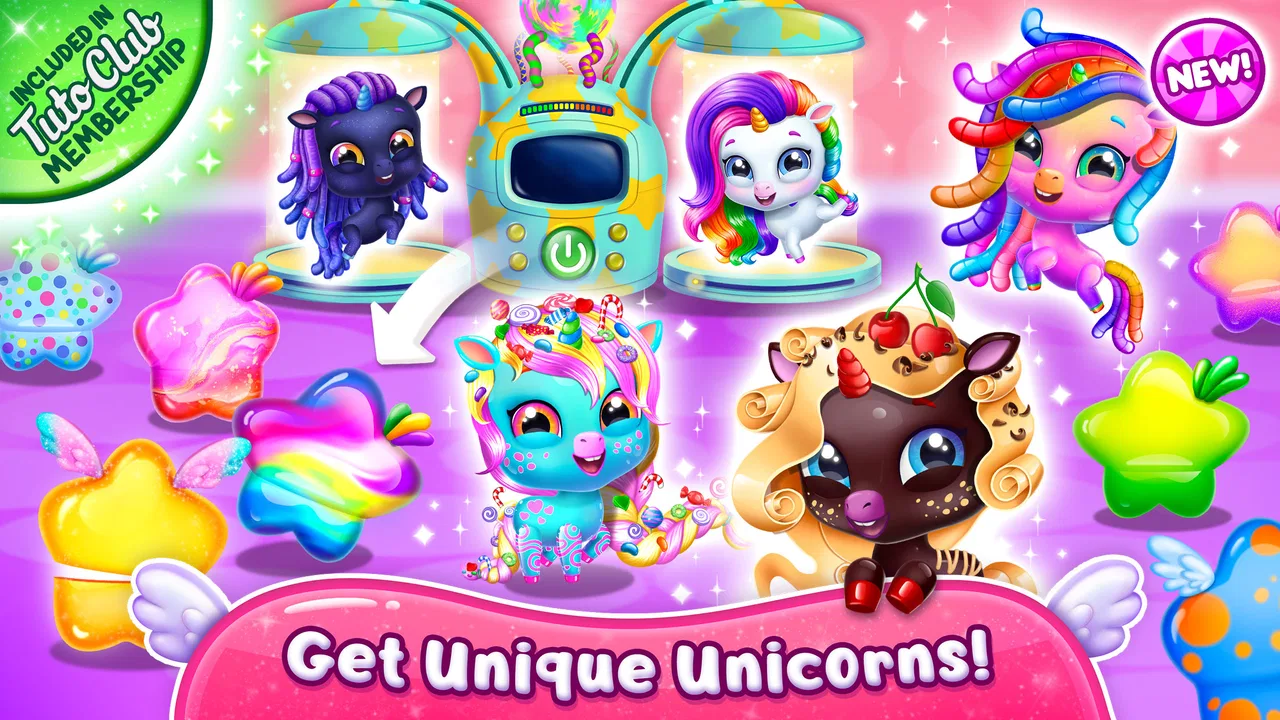
Kpopsies - Hatch Baby Unicorns is a virtual pet game where players hatch and care for adorable baby unicorns. The main objective is to nurture your unicorns by feeding, playing, and decorating their environments. As they grow, they unlock new stages and abilities, creating a fun and engaging experience for all ages.
02Is Kpopsies - Hatch Baby Unicorns suitable for children?
Yes, Kpopsies - Hatch Baby Unicorns is designed to be family-friendly and suitable for children. The game features colorful graphics, simple controls, and educational elements that encourage creativity and responsibility. However, parental supervision is recommended to manage any in-app purchases and ensure a safe gaming experience.
03Are there in-app purchases in Kpopsies - Hatch Baby Unicorns?
Kpopsies - Hatch Baby Unicorns offers a variety of in-app purchases to enhance the gameplay. Players can buy items to customize their unicorns or speed up progress. While the game is free to download and play, these purchases are optional and designed to enhance the gaming experience for those who choose to invest.
04What devices are compatible with Kpopsies - Hatch Baby Unicorns?
Kpopsies - Hatch Baby Unicorns is available on both Android and iOS platforms. It is compatible with most modern smartphones and tablets. To ensure optimal performance, it's recommended to have the latest operating system updates and sufficient storage space before downloading the app.
05How can I ensure my child’s safety while playing Kpopsies?
To ensure your child’s safety while playing Kpopsies - Hatch Baby Unicorns, activate parental controls on your device to restrict in-app purchases and manage screen time. Additionally, discuss safe online behavior with your child and monitor their gameplay to ensure a positive and secure experience.
Pros
- Adorable graphics appeal to all ages.
- Simple
- intuitive gameplay mechanics.
- Frequent updates add new content.
- Interactive features enhance engagement.
- Offline mode available for on-the-go play.
Cons
- In-app purchases can be costly.
- Limited educational value.
- Repetitive tasks may bore some users.
- Requires significant storage space.
- Advertisements can be intrusive.

Kpopsies - Hatch Baby Unicorns
Gallery